The Lonely Girl, Her Rubber Duck, and a Secret That Changed Everything
My grandmother's heart always ached seeing the little girl alone, day after day. When I finally found the courage to approach her, a simple act of kindness unveiled a truth I could never have imagined, turning my life upside down.
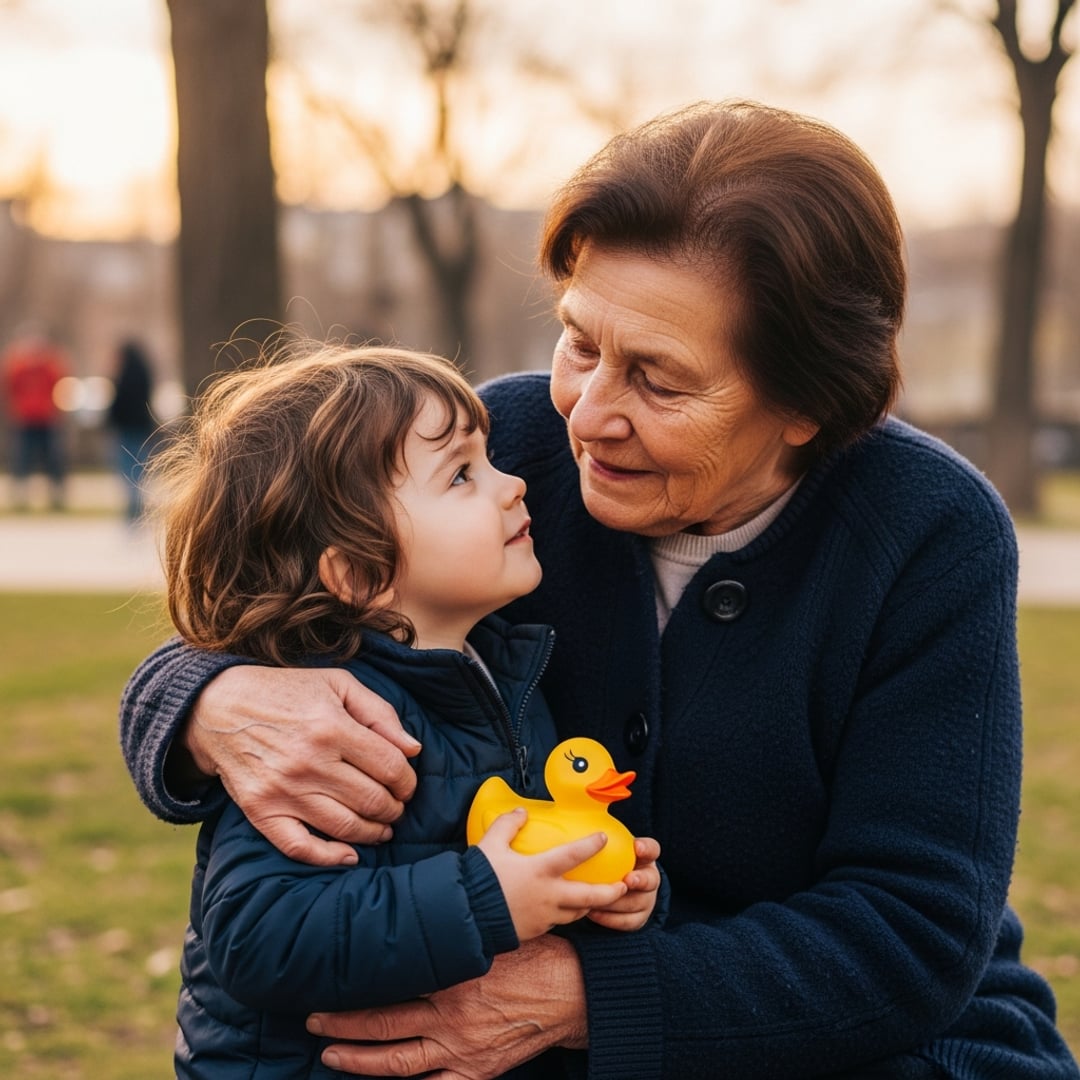
“He’s not YOUR dad!” The child’s voice echoed through the park, sending my heart racing. My coffee cup, already cold, nearly slipped from my trembling hand. I looked at little Ana, just five years old, pointing an accusing finger at the man who picked her up every day. My body froze. I already knew something was wrong, but hearing it, with such certainty, made the ground vanish beneath my feet.
“What are you talking about, Ana?” The man, who introduced himself as her father, had a forced smile and a nervous glint in his eyes. He tried to pull her arm, but the girl dodged him. “HE IS NOT! Mommy said so!” The yellow rubber duck she always carried fell to the ground, and her eyes met mine, filled with dread and heartbreaking innocence.
I had first noticed Ana about three months ago. I used to sit on the same park bench, reading a book and watching the world go by, trying to fill the void left by my beloved John’s passing. He left almost a year ago, and loneliness was a constant companion. Ana was always there, alone on a swing or sitting on the slide, while other children played in groups. She hugged her rubber duck as if it were her only friend. One day, I decided I couldn’t just watch anymore. My grandmother’s heart, which I never had the chance to exercise, cried out for her.
“Hello, dear,” I said, approaching her. “Would you like a cookie?” I held out a tapioca cookie I had baked that morning. Her large, brown eyes watched me with suspicion, but the sweet smell of the cookie won her over. She took it, shyly. “Thank you,” she murmured, her voice almost a whisper. From that day on, our ritual began. Every day, I brought a cookie and we talked. She told me about school, about her drawings, and about “Mommy,” who was always “too tired” to play. She never spoke of her father. It was always a different man who picked her up or dropped her off at the park.
One afternoon, when I asked why she never played with other children, Ana clutched the duck to her chest and said, “Mommy said not to trust strangers. And never to tell about my real daddy.” That intrigued me. What kind of secret was this? I tried to ask more, but she clammed up. I didn’t want to scare her, so I changed the subject.
Three days before that shocking scene in the park, the same man who was picking her up today came for her. He smiled at me, a smile that didn’t reach his eyes. “Hello, ma’am. You take good care of my daughter?” he said, and it sounded strange to me. Almost aggressive. Ana, beside him, flinched a little. “She’s a lovely child,” I replied, with a lump in my throat. He just shrugged and led the girl away, who looked back, a silent plea for help in her eyes.
Now, watching the scene unfold, with Ana screaming that he wasn’t her father, I knew I had to intervene. “Sir, please, leave the girl alone. She seems distressed,” I said, standing up. The man glared at me, his eyes flashing. “That’s none of your business, old woman! Mind your own!” He grabbed Ana’s arm more tightly. The girl began to cry. “DON’T TOUCH ME! I WANT MY MOMMY!”
In that moment, I thought of nothing but protecting that child. “LET HER GO RIGHT NOW!” I yelled, with a strength I didn’t know I had. Several people in the park began to watch us. The man, realizing the attention, hesitated. But Ana, amidst her tears, screamed something that chilled me to the bone: “He took Mommy’s money and said he was leaving! He’s not my real daddy! Real daddy is sick!”
That explained everything. The man wasn’t her father. He was taking advantage of a situation. My mind raced to Ana’s “tired mommy,” and the lack of money. I hugged Ana, trying to calm her, while the man, realizing his deception had been discovered, tried to flee. But one of the onlookers, a strong young man, stopped him. The police were called.
Later, at the police station, Ana told her story between sobs. The man was her mother’s brother, who was hospitalized in serious condition with a rare illness. He had offered to take care of Ana, but was actually selling the furniture from the house, using her mother’s money, and planned to leave, abandoning Ana. Ana’s “tired mommy” was, in fact, her aunt who spent nights at the hospital, exhausted, trying to fight for her sister’s life. The rubber duck was a gift from her real father, who had died a year ago in an accident, leaving Ana’s mother devastated and ill. Her true father had promised that the duck would always be there for her, as a guardian.
My heart broke and mended at the same time. That man had been arrested. But what about Ana? I couldn’t leave her. Her aunt, learning everything, came to pick her up, exhausted and tearful. But I knew I couldn’t just walk away. “I can help,” I told the aunt, who looked at me in surprise. “My house is too big for one person. I can take care of Ana while you recover and care for your sister.” It’s what John would have done.
Today, three months later, Ana lives with me. Her aunt visits whenever she can, and Ana’s mother is slowly recovering, with the help of neighbors and friends who rallied together for a fundraiser. Ana calls me “cookie grandma” and fills my house with laughter and colorful drawings. She still carries her rubber duck, but now, her eyes no longer hold fear. They shine with the certainty that she will never be alone again. I discovered that the greatest gift life can give is not a child, but the unexpected love of a child who chooses you to be their family.