The Little Girl with the Red Bow: A Secret That Changed My World
An unexpected bond between an elderly woman and a child seemed like a gift from heaven. But what the little girl confessed to the grandma in a shocking whisper shook her faith in human kindness, revealing a dark secret no one imagined.
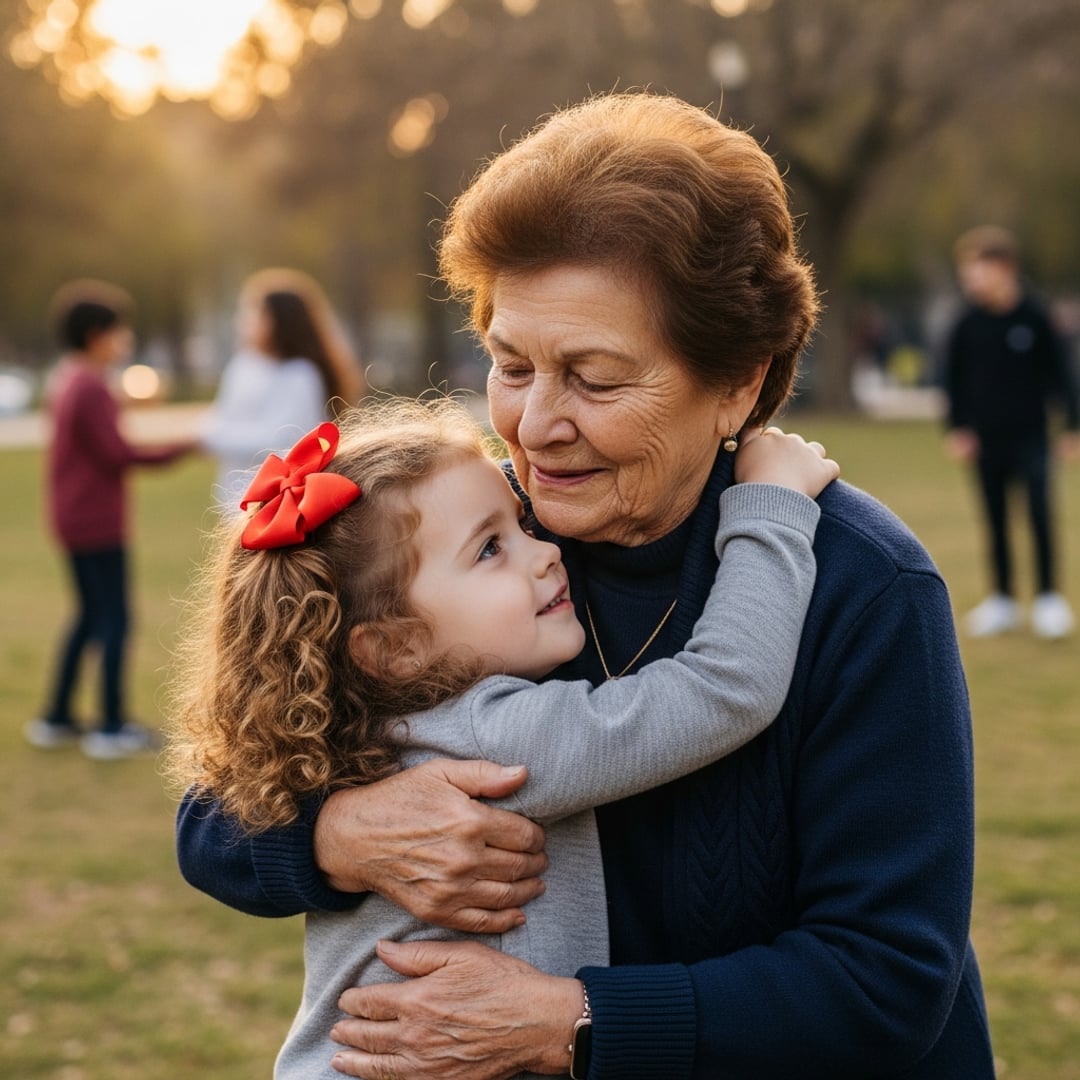
The shrill voice of Mrs. Peterson pulled me from my reverie. “Antonia, you won’t believe what that little girl just told me!”—Mrs. Peterson was panting, her face red with indignation as she gestured to the empty swing where Clara, my seven-year-old friend, used to laugh. My heart went cold. I had only known her for a few months, but the bond between us was deep, more so than with any member of my own distant family. “What is it, Mrs. Peterson? Don’t scare me like that!” I asked, feeling a lump in my throat. Mrs. Peterson leaned in, her eyes wide: “She said her mother FORCES her to come here every day! She said if she doesn’t come, she’ll get hit! And that she can never really play because her mother just wants her to stay nearby to ask things from others. It’s A DISGRACE!”
My world, which seemed to have found a little color with Clara’s arrival, collapsed. A wave of nausea hit me. That sweet little girl, with her bright eyes and her perfectly styled red bow, was hiding so much pain? I couldn’t breathe. That mother, whom I saw from afar waving from her house window, seemed so normal. Clara’s innocence fooled me. How had I not noticed before?
It all started about six months ago. My adult children lived in other cities, and I, a widow for five years, felt the weight of loneliness every day. My routine was monotonous: wake up, coffee, watch TV, lunch, and in the afternoon, walk to the neighborhood park, sit on the same bench, and watch life go by. The children playing were the only distraction that pulled me from melancholy. I saw their smiles, their clumsy runs, and for a moment, I felt a part of something. It was on one of those afternoons that Clara, with her curly hair and a plaid dress, approached me. “Grandma, are you sad?” she asked, her eyes huge and curious. “No, my angel. I’m just thinking,” I replied, surprised by the little one’s boldness. She sat beside me on the bench, something no child had done before. “My grandma also sat like this. She went to heaven.” There was an unusual sweetness and maturity in her. From then on, Clara became my shadow at the park. She brought her drawings, told school stories, and I, in turn, listened attentively and shared my biscuits with her. It wasn’t long before our friendship became the most anticipated part of my day. I even started preparing special little snacks just for her. No one at the park questioned it. A lonely elderly woman and an affectionate child. It seemed like the perfect combination.
Two weeks after the conversation with Mrs. Peterson, guilt gnawed at me. I had to do something, but the fear of making Clara’s situation worse paralyzed me. What if I was overreacting? What if Mrs. Peterson had misunderstood? But the image of Clara’s frightened eyes, the way she avoided her mother’s gaze when she passed by, told me that something was very wrong. I decided I couldn’t stay silent anymore. One day, I gathered courage and waited for Clara to sit beside me. “Clara, my love, does your mommy hurt you?” I asked, feeling my heart race. She lowered her head, playing with the hem of her dress. “Sometimes, Grandma. She says I need to learn to be strong to get what I want in life. And that I need to ask people for things, otherwise we won’t have money for food.” Her voice was a whisper, almost inaudible, but every word pierced my soul like a knife. My mind screamed: “STOP THIS, SHE’S A CHILD!”
That same afternoon, before sunset, I went to Clara’s house. Her mother, a thin woman with tired eyes, answered the door. “Ms. Antonia, what a surprise!” she said, with a forced smile. “I need to talk to you about Clara,” I began, my voice trembling a little. I told her what I knew, Mrs. Peterson’s words, what Clara had told me. The woman’s expression changed from surprise to anger, then to despair. “You don’t understand! I’m a single mother, unemployed, my husband abandoned us! I do what I can! Clara is a good girl, she just wants to HELP ME!” She burst into tears, sitting on the doorstep. “I just want her to have a better life, but I don’t know how… And if I don’t bring something home, we don’t eat. I don’t really hurt her, I just… I just push her a little so she learns to be strong.” That confession caught me by surprise. It wasn’t pure malice, but a deep despair, camouflaged as severity. In her eyes, I saw the same loneliness I felt, the same hopelessness, but multiplied by the responsibility of a daughter.
At that moment, something inside me ignited. I couldn’t judge her. I could help. “Listen,” I said, my voice firmer now. “I won’t call anyone. But you and Clara need help. And I can help.” I offered her a small sum of money that I kept for emergencies and promised to teach her to cook, to make cakes and sweets to sell in the neighborhood. I had my old recipes, a good oven, and plenty of time. She looked at me, incredulous. “You would do that for us?” Her voice was a thread of hope. “Yes,” I said, “because Clara is a sweet girl and you deserve a chance.” In the following weeks, our kitchen transformed into a small factory of delights. Clara, free from pressure, came to the park to truly play and, afterwards, helped me decorate the sweets, laughing and singing. Her mother, whose name was Ana, was a quick and dedicated learner. In less than a month, they were already selling their products at the park and at the school gate, and the income began to appear. The transformation of Ana and Clara was visible. Ana began to genuinely smile, her eyes lost their weariness. And Clara? Clara blossomed. Her laughter echoed through the park, and the red bow now seemed to shine even brighter.
Today, Ana and Clara are part of my family. The park continues to be our meeting point, but now, not just for Clara to play, but for the three of us to share laughs and dreams. I discovered that loneliness can be cured not only by affection, but by action, by sharing, by the faith that love can rescue even the most lost souls. A child’s love not only saved me from loneliness but showed me that sometimes, the deepest kindness hides where we least expect it, and that true strength lies in reaching out to those who need it most. Never underestimate the power of a small red bow.