My Husband Couldn't Have Kids – So Whose Children Are These?
My husband was the rock of our family, a devoted father to our five children. I never imagined a routine doctor's visit could unearth such a shocking truth that would make us question everything we had built together.
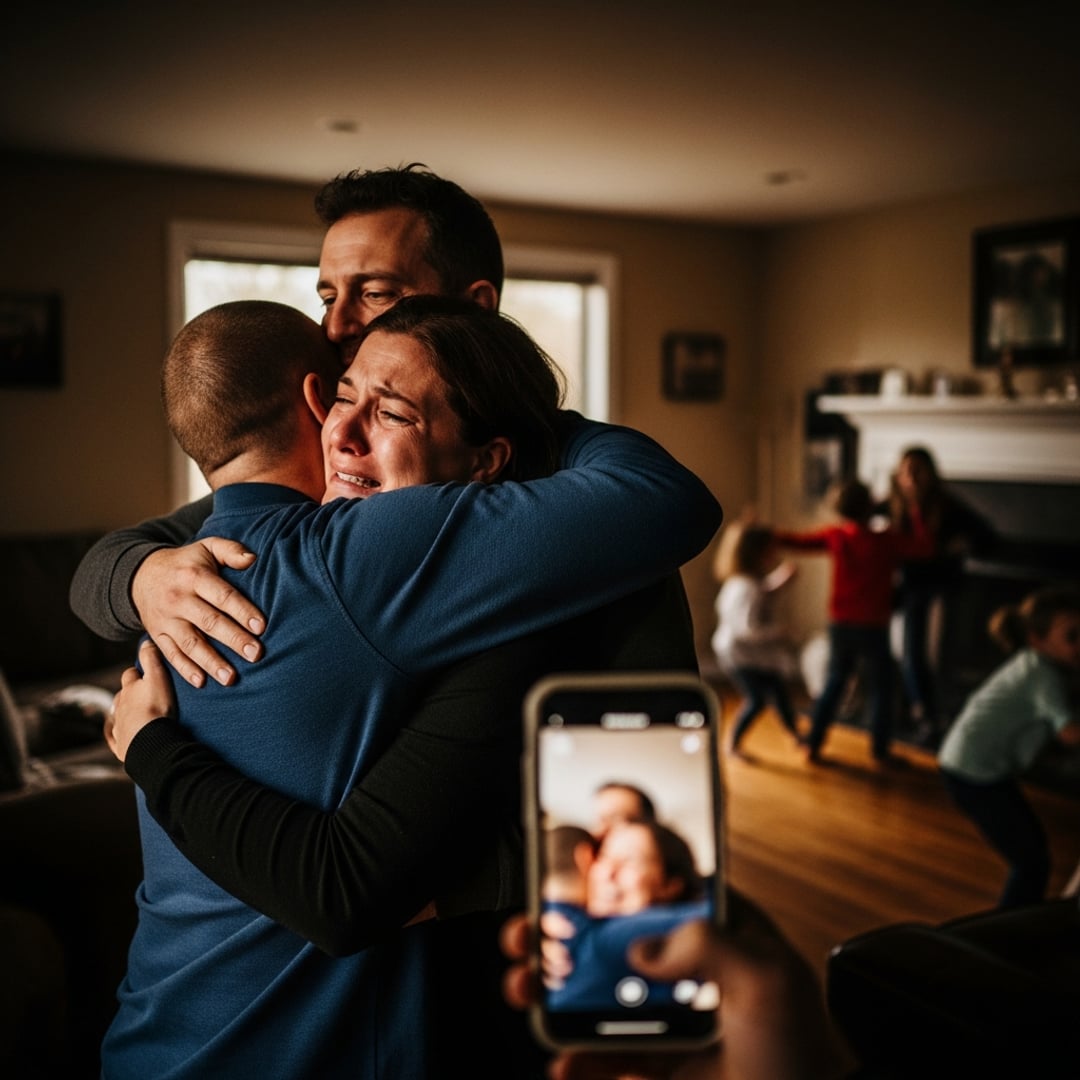
The phone rang, and I answered, expecting my mother-in-law’s voice confirming dinner plans. Instead, a serious voice on the other end said, “Mrs. Santos, we need Mr. Santos to come back to the office urgently. The test results…” My heart began to pound in my chest. “What happened? Is it serious?” I almost yelled. “I can’t discuss it over the phone. He needs to come in.” I felt the floor disappear beneath my feet. My husband, Peter, was at work, and I didn’t want to scare him, but the doctor’s tone was of UTTER ALARM.
Two weeks earlier, life was normal. Peter, at 38, was experiencing back pain and unexplained fatigue. “It must be work stress, or maybe I’m getting too old to play soccer with the kids,” he’d joke, as I massaged him on our living room sofa, the TV tuned to a cartoon our kids loved. “You’re not old, honey,” I’d reply, laughing. “You just need a little more rest.” He had gone to the doctor for routine check-ups, something he always put off.
That specific morning, I was in the kitchen, preparing breakfast. Our five children – Gabriel, 12, Sofia, 10, twins Lucas and Laura, 7, and little Miguel, just 3 years old – were scattered around the house, each in their own morning mess. The smell of fresh coffee and toast filled the air, a scene I always cherished. Peter came downstairs with a tired smile. “Good morning, my queen. Good morning, my little princes and princesses.” He kissed my forehead and joined the table, where Miguel was already trying to steal a piece of bread from Sofia.
He picked up his phone to check the news and saw a missed call from the hospital. “Strange,” he mumbled. “The doctor asked me to call back urgently.” I shrugged, “Probably just wants to schedule another test.” But the look on his face as he listened to the voicemail made me stop stirring at the stove. His eyes widened. “Isabella…” His voice was a pale whisper. “She said I need to go immediately… something about surprising results.”
I insisted on going with him. We walked into Dr. Almeida’s office, a middle-aged woman with glasses perched on her nose and a serious expression. She looked at us, took a deep breath, and said, “Peter, your sperm analysis results… indicate that you are sterile. Congenitally sterile. This means you could never have fathered biological children.” My head spun. I almost fainted. Five children. FIVE. Our children. Little Miguel, who looked so much like him, with the same brown eyes and mischievous smile. How was this POSSIBLE? I looked at Peter, whose face was white as the wall. “This… this is a MISTAKE!” he yelled, banging on the table. “I have five children!” Tears began to stream down my face. My world ended there. I couldn’t breathe. The doctor was calm but firm. “We repeated the tests three times, Peter. The results are unequivocal.”
We left the office in heavy silence, the car feeling like a coffin. Peter was in shock, I was devastated. The pain was almost physical, a hole in my chest. We got home, and he went upstairs without saying a word. I knew what he was thinking. What I was thinking. Betrayal. How could I explain this? I had never betrayed him. I loved him more than my own life. But how could five children exist if he was sterile? I felt like I was going to explode.
Hours passed. I was sitting on the living room floor, hugging my knees, when Peter came downstairs. His eyes were red. He held an old, yellowed folder. “I called my brother, Richard,” he said, his voice choked. Richard, my brother-in-law, was a year older than Peter, and they had been inseparable since childhood. Richard had always been like an older brother to me too.
“Richard reminded me of something I had forgotten,” Peter continued. “When I was 18, I had a serious blood problem. I needed a bone marrow transplant. Richard was the only match. He saved me. It happened before we met, Isabella. I was so young, so sick, I barely remember the details. But Richard called me today and said the doctors, at the time, mentioned that marrow transplants can, in rare cases, alter the genetic makeup of the recipient’s reproductive cells, especially if the marrow is from a male donor. He researched it further after our call. It’s very rare, but it happens: a recipient can start producing sperm with the donor’s DNA.” He pointed to the folder. “He emailed me this. It’s a scientific article on the subject.”
I took the folder and started reading, my hands trembling. Peter’s eyes met mine. “Does that mean…” I whispered. “Does that mean our children… are biologically his?” The word “his” felt like a knife. Peter shook his head. “No, Isabella. They are OURS. They always have been. And they are mine too. I raised them, I love them, they are my blood, no matter the DNA. But the marrow donor… The DNA in the sperm… is Richard’s.”
I called Dr. Almeida, with Peter by my side. She was silent for a moment when I explained the situation. “That… that is a possibility, yes,” she said. “Extremely rare, but documented. Bone marrow transplantation can, in certain cases, lead to gonadal chimerism, where the DNA in the germ cells aligns with that of the donor. Peter, we need to do a genetic test with the children and with Richard, to confirm. But, if this is true, there is nothing to worry about in terms of betrayal. It’s a medical miracle.”
Three days later, the genetic test results arrived. Dr. Almeida called us in person. Hand in hand, we entered the office. She smiled. “Congratulations, Peter and Isabella. It’s exactly as you suspected. The tests confirm that your children’s DNA is identical to Richard’s. Your children are genetically your nephews and nieces, but in every other sense, they are YOURS.” Relief, joy, and love exploded in my chest. I broke down in tears, but this time, they were tears of happiness. Peter hugged me tight, and I felt his heart beating against mine. He was a father, a husband, and a man who had faced the unthinkable with his head held high. “My children,” he murmured, “my beautiful children.”
That night, Richard came for dinner. Our children ran to hug him as they always did. Richard lifted them, tickled them, and laughed with them. I watched him, and my heart filled with immense gratitude. He had not only saved Peter’s life years ago but also, indirectly, given us the greatest gift of all: our children. Peter sat beside him, placed his hand on Richard’s shoulder and said, his voice choked: “Thank you, brother. For everything.” Richard just smiled, a genuine and warm smile. “Always, Peter. Always.” Family is built on love, not just blood. And our love, after everything, was stronger than ever.